Introduction
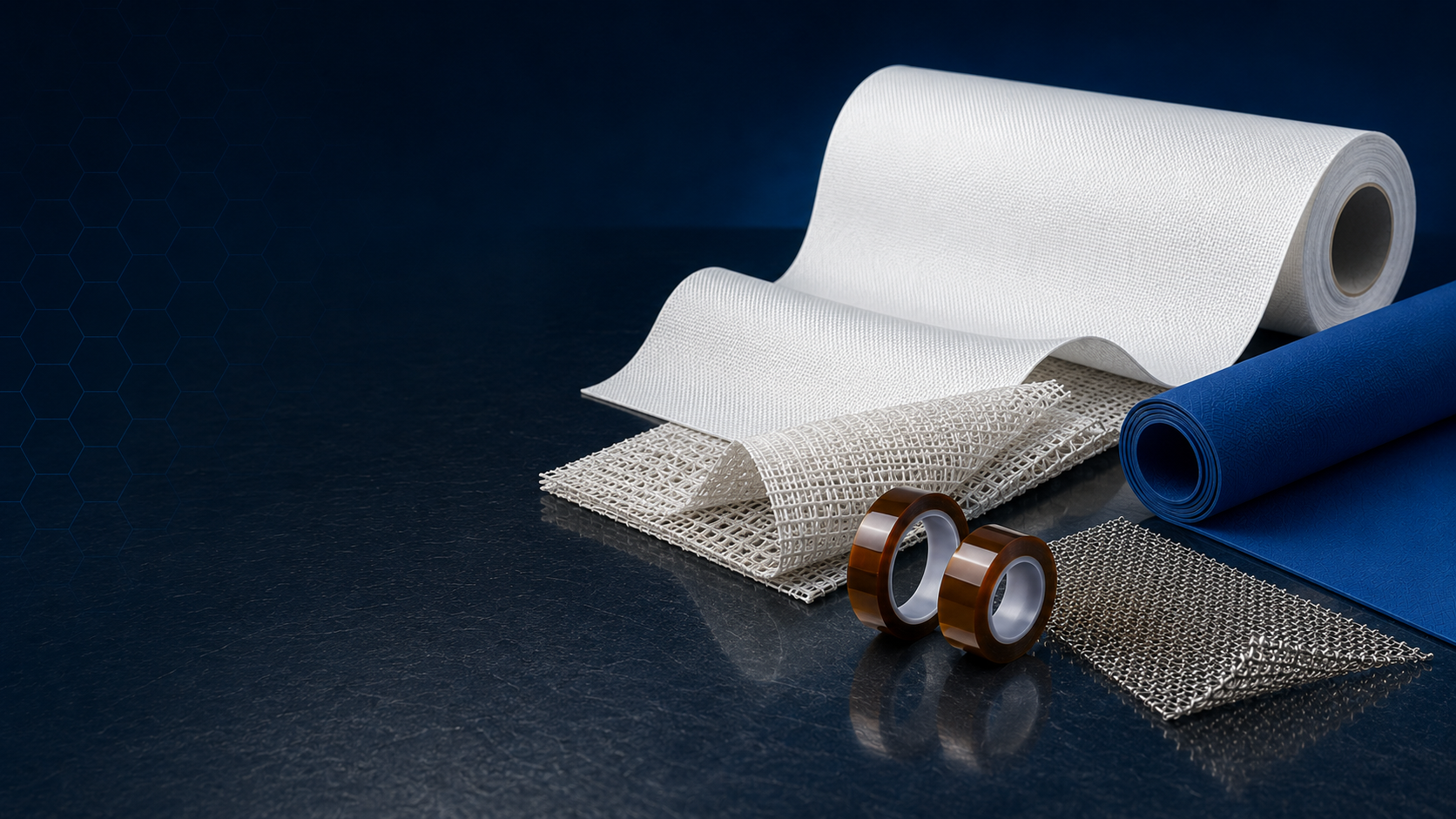
Non stick materials for thermal processing equipment are used to reduce product sticking, improve release performance, protect machine surfaces and support cleaner production in thermal-processing, confectionery, packaging, drying and process handling lines. Common materials include PTFE coated fiberglass fabric, silicone coated fiberglass fabric, PTFE adhesive tape, reusable release sheets, conveyor belt liners and custom cut non-stick mats.
This application page is written for B2B buyers, process machinery manufacturers, maintenance teams, industrial distributors and OEM buyers who need custom size non-stick materials for processing equipment, replacement parts or bulk procurement.
WOLTOOL supplies non-stick and heat resistant materials for thermal processing applications, with options for custom cutting, thickness selection, roll supply, sheet supply and RFQ-based sourcing.
What Are Non-Stick Materials for thermal processing Equipment?
Non-stick materials for thermal processing equipment are heat resistant films, fabrics, mats, tapes and liners used on machinery surfaces where dough, sugar, chocolate, sauce, powder, adhesive packaging film or heated process products may stick.
In industrial process production, these materials are commonly installed on trays, belts, sealing jaws, chutes, guide plates, molds, drying racks, packaging stations and heat contact areas.
A non-stick liner is used for release and surface protection. PTFE coated fiberglass fabric is used for high temperature release and dimensional stability. Silicone coated fiberglass fabric is used where flexible grip, heat resistance and process contact handling are required. PTFE adhesive tape is used for localized machine protection or sealing bar coverage.

Why Non-Stick Materials Matter in Production Lines
Non-stick materials for thermal processing equipment help reduce downtime caused by sticking, residue buildup and manual cleaning. In high-volume production, even a small sticking issue can affect output, product appearance and maintenance frequency.
For procurement teams, the material choice should not only consider non-stick performance. It should also match temperature range, abrasion level, process contact requirements, cleaning method, installation method and replacement cycle.
Common buyer goals include:
- Reducing sticking on heated equipment trays, conveyor belts and heat sealing surfaces
- Protecting machinery surfaces from residue, scratches and heat damage
- Improving release performance in continuous process production
- Replacing worn liners, sheets or tapes during maintenance
- Ordering custom sizes for OEM thermal processing equipment
- Sourcing bulk rolls, sheets or pre-cut parts from one supplier
Common Applications
Non-stick materials are used across many thermal processing and packaging lines. The exact specification depends on temperature, contact time, product type and mechanical movement.
thermal-processing and Dough Processing
PTFE and silicone coated materials are commonly used for heated equipment trays, dough release sheets, oven liners, proofing boards and conveyor belt contact surfaces. They help reduce dough sticking and support repeated production cycles.
Typical products include:
- Silicone equipment liners for heated equipment trays
- PTFE coated release sheets
- Reusable oven liner sheets
- Custom cut non-stick tray liners
- PTFE conveyor belt liners
Confectionery and Sugar Processing
Sugar, syrup, caramel and chocolate can stick strongly to metal or plastic machine surfaces. Non-stick sheets and liners can be used on cooling tables, cutting areas, guide plates and transfer surfaces.
Common requirements include smooth surface finish, easy release, heat resistance and repeated cleaning compatibility.
process Packaging Equipment
PTFE adhesive tape and PTFE coated fiberglass fabric are often used on sealing jaws, heat seal bars, guide rails and packaging machine contact points. The material helps reduce sticking from packaging film, adhesive residue and heated product contact.

Typical applications include:
- Heat sealing bar cover tape
- Packaging machine guide plate liner
- Non-stick tape for sealing jaws
- Release film for packing equipment
- Custom cut PTFE fabric strips
Drying, Freezing and Transfer Equipment
Non-stick mesh belts, coated fabrics and liners can be used in drying, freezing, cooling and transfer systems. These applications often require airflow, temperature resistance and easy product release. A PTFE mesh conveyor belt is one option where ventilation through the conveying surface is required.
Maintenance and Replacement Parts
Maintenance teams often use PTFE tape, silicone coated fabric, PTFE sheet and custom cut release liners to replace worn surfaces during equipment repair. Small MOQ and custom cutting are important for replacement projects.
Key Material or Product Features
Non-stick materials for thermal processing equipment are selected based on both material properties and production conditions.
Important features include:
- Non-stick release surface for dough, sugar, sauce, powder, film or adhesive contact
- Heat resistance for ovens, sealing bars, drying systems and heated machinery
- process contact suitability depending on the exact grade, applicable documentation and application
- Chemical resistance for cleaning agents and processing residues
- Custom cut size for trays, belts, plates, jaws and replacement parts
- Flexible supply form including rolls, sheets, strips, tapes and die-cut shapes
- Reusable or replaceable design depending on production line requirements
- Low-friction surface to support smoother material transfer
Main Non-Stick Material Types for thermal processing Equipment
Different materials solve different production problems. The table below helps buyers compare common options before requesting a quote.

| Material Type | Typical Form | Main Advantage | Common Applications | Notes for Buyers |
|---|---|---|---|---|
| PTFE Coated Fiberglass Fabric | Roll, sheet, strip, custom cut piece | High temperature release and dimensional stability | thermal-processing liners, conveyor belt liners, sealing machine covers | Suitable when heat resistance and non-stick release are both required |
| Silicone Coated Fiberglass Fabric | Roll, sheet, mat, custom cut liner | Flexible surface with heat resistance | thermal-processing mats, tray liners, process handling surfaces | Good for buyers needing softer handling or flexible contact |
| PTFE Adhesive Tape | Roll, strip, pre-cut tape | Easy installation on machine surfaces | Heat sealing bars, packaging jaws, guide plates | Useful for maintenance and localized surface protection |
| PTFE Sheet | Sheet, machined part, custom cut shape | Chemical resistance and low friction | Guide plates, wear pads, sliding parts | Better for rigid parts rather than fabric liners |
| PTFE Mesh Belt | Belt, mesh sheet, custom size | Airflow and non-stick transfer | Drying, cooling, freezing, thermal processing transfer | Check mesh size, belt width and edge reinforcement |
| Silicone equipment liner | Mat, tray liner, custom size | Reusable release surface | thermal-processing facility trays, dough processing, oven trays | Custom size and thickness should match tray and oven conditions |
How to Choose the Right Specification
Choosing the right non-stick material requires matching the material to the real production environment. Buyers should prepare application details before requesting a quote.
1. Confirm the Working Temperature
Temperature affects material selection, coating life and dimensional stability. Oven liners, sealing bars and drying equipment may require different heat resistance levels.
For an RFQ, provide:
- Continuous working temperature
- Peak temperature
- Contact time
- Whether the part touches direct heat, hot air or heated metal
2. Identify the process Product or Contact Material
Different products create different sticking problems. Dough, caramel, syrup, chocolate, cheese, powder and packaging film require different surface behavior.
Useful RFQ details include:
- Product type
- Moisture or oil content
- Sugar or starch content
- Whether the material contacts process directly or indirectly
- Cleaning method after use
3. Decide the Required Form
Non-stick materials can be supplied in different formats depending on installation.
Common supply forms:
- Full rolls
- Cut sheets
- Narrow strips
- Adhesive-backed tape
- Custom die-cut parts
- Sewn or reinforced liners
- Mesh belts
- Tray-size mats
4. Check Thickness and Surface Requirement
Thicker material may improve durability, while thinner material may fit better in tight machinery spaces. Smooth surfaces are often used for release, while textured surfaces may be useful for handling or grip.
5. Match the Installation Method
Some buyers need adhesive tape for quick maintenance. Others need removable liners, mechanical fixing holes, edge reinforcement or custom cut mats.
Before ordering, confirm:
- Adhesive or non-adhesive requirement
- Hole position
- Edge sealing
- Corner radius
- Roll width
- Sheet tolerance
- Packaging requirement
Comparison Table: Non-Stick Materials for thermal processing Equipment
| Buying Requirement | Recommended Material | Why It Fits | Typical Buyer |
|---|---|---|---|
| heated equipment trays release | Silicone equipment liner or PTFE release sheet | Reusable, easy release, custom tray size | thermal-processing facility, thermal-processing supplier |
| Heat sealing jaw protection | PTFE adhesive tape | Easy to apply and replace | Packaging machine factory, maintenance team |
| High temperature conveyor liner | PTFE coated fiberglass fabric | Heat resistant and stable | thermal processing plant, OEM machinery buyer |
| Airflow drying or cooling | PTFE mesh belt | Non-stick surface with ventilation | Dryer equipment buyer, process processor |
| Rigid low-friction guide part | PTFE sheet or machined PTFE part | Low friction and chemical resistance | OEM buyer, maintenance engineer |
| Flexible heat-resistant surface | Silicone coated fiberglass fabric | Flexible, durable, suitable for custom shapes | industrial equipment distributor, industrial buyer |
Customization Options
WOLTOOL supports custom non-stick material sourcing for thermal processing equipment and related machinery. Customization depends on material type, size, MOQ and production requirements.

Available customization options may include:
- Custom roll width
- Custom sheet size
- Custom tray liner size
- Custom cut strips
- Die-cut shapes
- Round corner cutting
- Hole punching
- Adhesive backing
- Edge reinforcement
- Different thickness options
- Different coating colors
- Bulk packaging
- OEM label or neutral packaging
- Sample order before bulk production
For OEM buyers and wholesalers, custom size and packaging can help reduce secondary processing cost after delivery.
Buying Considerations for B2B Buyers
Industrial buyers should evaluate more than unit price. Non-stick materials are often used in production lines where downtime, cleaning cost and replacement frequency affect total cost.
Material Selection
Choose the material based on temperature, movement, process type, cleaning method and expected replacement cycle. A low-cost tape may work for temporary maintenance, while coated fiberglass fabric or custom liners may be better for continuous production.
MOQ and Bulk Order
MOQ depends on product form. Standard tapes and sheets usually support smaller trial orders. Custom cut liners, mesh belts and OEM packaging may require higher MOQ. Buyers should confirm whether sample orders are available before bulk purchase.
Lead Time
Lead time depends on stock availability and customization level. Standard materials may ship faster. Custom cut pieces, die-cut shapes, special thicknesses and large bulk orders require more production planning.
Supplier Selection
A suitable supplier should understand industrial use, not only retail workshop use. For thermal processing equipment, the supplier should be able to discuss temperature range, material form, size tolerance, packaging and repeated procurement.
RFQ Information Checklist
To receive a faster quotation, prepare the following details:
| RFQ Item | What to Provide |
|---|---|
| Application | heated equipment trays, sealing jaw, conveyor liner, guide plate, drying belt or other use |
| Material Preference | PTFE fabric, silicone fabric, adhesive tape, mesh belt, PTFE sheet or unknown |
| Size | Length, width, thickness, roll width, sheet size or drawing |
| Quantity | Sample quantity and bulk order quantity |
| Temperature | Continuous and peak temperature |
| Contact Type | process contact, packaging film contact, indirect contact or machine surface protection |
| Custom Processing | Cutting, holes, adhesive backing, edge reinforcement or packaging |
| Delivery Requirement | Target lead time, destination country and order schedule |
Practical Selection Guide by Application
For heated equipment trays Liners
Use silicone equipment liners or PTFE release sheets when the main requirement is easy release and repeated use. Confirm tray size, thickness, oven temperature and cleaning method.
For Packaging Machine Heat Sealing Bars
Use PTFE adhesive tape or PTFE coated fiberglass strips. Confirm sealing temperature, jaw width, adhesive requirement and replacement frequency.
For Conveyor Surfaces
Use PTFE coated fiberglass fabric or PTFE mesh belt depending on whether airflow is required. Confirm belt width, product load, temperature and movement speed.
For Maintenance Repair
Use PTFE adhesive tape, PTFE sheet, silicone coated fabric or custom cut release sheets. Small MOQ and fast supply are usually important for maintenance buyers.
For OEM thermal processing Equipment
Use custom cut PTFE coated fabric, silicone coated fabric, PTFE sheet parts or mesh belts. OEM buyers should provide drawings, tolerances, target application and packaging requirements.
Request a Quote
Need non stick materials for thermal processing equipment?
Send WOLTOOL your application details, size, quantity and working temperature. We can help source PTFE coated fiberglass fabric, silicone coated fiberglass fabric, PTFE adhesive tape, PTFE mesh belt, PTFE sheet and custom cut non-stick liners for thermal processing and packaging machinery.
For a faster quotation, include photos, drawings or existing sample dimensions. Custom size, small trial orders, bulk supply and OEM packaging can be discussed based on your project requirements. Contact WOLTOOL to start your RFQ.
FAQ
What are non stick materials for thermal processing equipment?
Non stick materials for thermal processing equipment are liners, sheets, fabrics, tapes and belts used to reduce sticking on process machinery surfaces. Common options include PTFE coated fiberglass fabric, silicone coated fiberglass fabric, PTFE tape, PTFE mesh belts and silicone equipment liners.
Which non-stick material is suitable for heated equipment trays?
Silicone equipment liners and PTFE release sheets are commonly used for heated equipment trays. The right choice depends on tray size, oven temperature, cleaning method, expected service life and whether the buyer needs reusable or replaceable liners.
Can PTFE coated fiberglass fabric be custom cut?
Yes. PTFE coated fiberglass fabric can usually be supplied in rolls, sheets, strips or custom cut shapes. Buyers can request custom width, length, thickness, hole punching, corner cutting or edge processing depending on the application.
Is PTFE adhesive tape used in process packaging machines?
Yes. PTFE adhesive tape is often used on heat sealing bars, sealing jaws and guide plates in packaging machines. It helps reduce film sticking and protects heated metal surfaces. Buyers should confirm temperature, tape width and adhesive type before ordering.
What information should I provide for an RFQ?
For an RFQ, provide application, material preference, size, thickness, quantity, temperature range, contact type, custom cutting requirements and destination country. Photos or drawings can help the supplier recommend a suitable material faster.
Do you support small MOQ for maintenance projects?
Small MOQ may be available for standard tapes, sheets and common roll materials. Custom cut parts, special thicknesses and OEM packaging may require higher MOQ. Buyers can request sample quantities before bulk orders.
How do I choose between PTFE and silicone coated materials?
Choose PTFE coated materials when high temperature release, low friction and chemical resistance are important. Choose silicone coated materials when flexibility, grip and a softer contact surface are more important. The final choice depends on the machine and process product.